


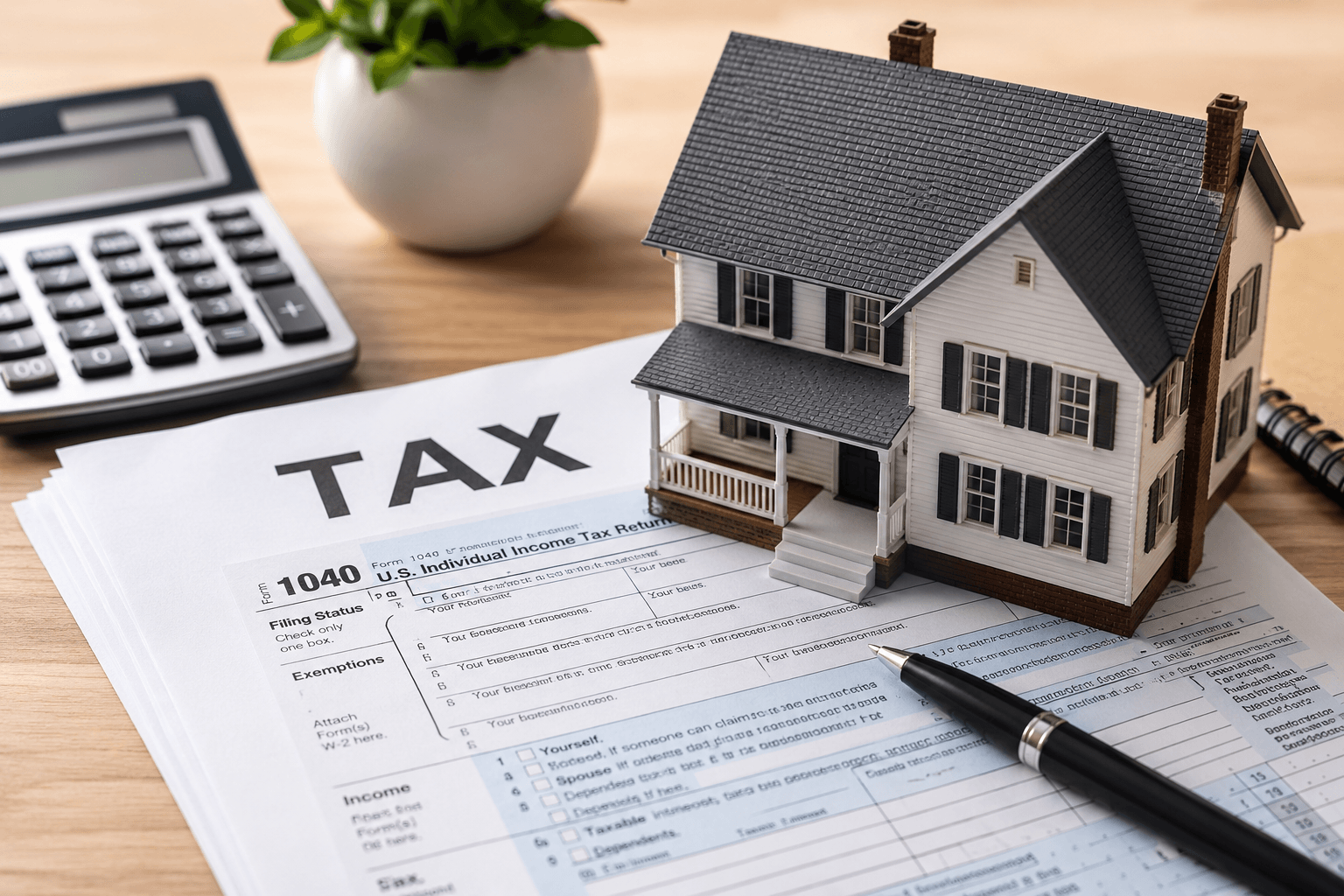
Taxes on Selling a Home in Ohio: What Every Seller Should Know
Selling your home in Ohio can trigger several tax implications depending on how long you have owned the property, how much profit you made, and your overall financial situation. Understanding the tax landscape before you sell helps you plan effectively and avoid unwelcome surprises at tax time. This guide covers the key taxes that apply when selling a home in Ohio in 2026.
Federal Capital Gains Tax on Home Sales
The most significant tax concern for most Ohio home sellers is federal capital gains tax. However, most homeowners qualify for a substantial exclusion that makes this tax irrelevant.
The Primary Residence Exclusion: Under current federal tax law (IRC Section 121), you can exclude up to $250,000 of capital gain from the sale of your primary residence if you are single, or $500,000 if you are married filing jointly. To qualify, you must have owned and lived in the home as your primary residence for at least 2 of the last 5 years.
For most Richland County homeowners who have lived in their home for several years, home prices have not increased enough to exceed these exclusion limits — meaning most Ohio home sellers owe no federal capital gains tax at all.
When You Might Owe Capital Gains Tax
Capital gains tax becomes relevant in these situations.
Your Gain Exceeds the Exclusion: If you are single and your profit exceeds $250,000 (or $500,000 for married couples), you owe capital gains tax on the excess.
You Do Not Meet the Ownership/Use Test: If you have owned or lived in the home for less than 2 years, the exclusion may not apply. Partial exclusions are available for certain hardship situations (job relocation, health issues, unforeseen circumstances).
You Are Selling an Investment Property: The primary residence exclusion does not apply to investment properties or vacation homes. Gains from investment property sales are taxable as capital gains.
Calculating Your Capital Gain

Your taxable gain is the sale price minus your adjusted basis in the property.
Your adjusted basis starts with your original purchase price, then adds the cost of capital improvements you made (new roof, addition, kitchen remodel), buying and selling costs not previously deducted, and other adjustments.
It subtracts any depreciation you claimed (relevant for properties that were ever used as rentals).
Example: You purchased your Mansfield home for $85,000 in 2010. You added a $15,000 addition in 2018. You sell for $175,000. Your adjusted basis is $100,000. Your gain is $75,000. This is well below the $250,000 single exclusion, so you owe no federal capital gains tax.
Capital Gains Tax Rates in 2026
If you do owe capital gains tax after applying the exclusion, the federal rates depend on how long you held the property and your income level.
Long-term capital gains (property held more than 1 year): 0%, 15%, or 20% depending on your taxable income.
Short-term capital gains (property held 1 year or less): Taxed as ordinary income at your regular federal income tax rate.
For most Ohio homeowners who have lived in their home for several years, any taxable gain above the exclusion would qualify for long-term capital gains rates.
Ohio State Income Tax on Home Sales
Ohio taxes capital gains as ordinary income. If you have a taxable capital gain after applying the federal exclusion, you may also owe Ohio state income tax on that gain. Ohio’s income tax rates in 2026 range from 0 to approximately 3.99 percent depending on your income level.
For most Ohio home sellers with gains below the federal exclusion, no Ohio state capital gains tax applies because there is no taxable gain to report.
Real Property Transfer Tax
As covered in the closing costs section, Ohio charges a conveyance fee of $1.50 per $1,000 of the sale price (combined state and county rate). This is paid at closing and reduces your proceeds — it is not a separate tax return obligation.
Property Tax Implications

When you sell your Ohio home, you will owe property taxes through your closing date. The title company handles this as a proration at closing. After the sale, property taxes become the new owner’s responsibility.
Tax Implications of Selling Below Market Value
If you sell your Ohio home significantly below market value — for example, in a quick cash sale — this does not trigger any additional tax. You report the actual sale price, not market value.
Tax Deductions Related to Selling
Sellers may be able to deduct certain selling expenses that reduce their capital gain calculation. These include real estate commissions, legal fees, recording fees, and other costs directly related to the sale. These are added to your basis (or subtracted from the gain), not claimed as separate deductions.
Inherited Property and Estate Tax Considerations
If you are selling an inherited Ohio property, special rules apply. Inherited property receives a stepped-up tax basis equal to the fair market value at the date of the previous owner’s death. This can dramatically reduce or eliminate capital gains on inherited properties.
Ohio does not have a state inheritance tax, but federal estate tax may apply to very large estates. Consult a tax professional for guidance on inherited property sales.
When to Consult a Tax Professional
Tax laws are complex and individual circumstances vary. You should consult a CPA or tax attorney before selling your Ohio home if:
Your anticipated gain approaches or exceeds the exclusion limits.
You have used the home as a rental at any point.
You are selling an inherited property.
Your situation involves a divorce, estate, or other complex ownership structure.
You are uncertain about your adjusted basis due to extensive improvements or other changes.
Tax Implications of Selling to a Cash Buyer
Selling to a cash buyer like Richland County Home Buyers does not change your tax situation compared to a traditional sale. You report the actual cash amount received as the sale price. If your gain is below the primary residence exclusion limit, no federal capital gains tax applies regardless of how you sold.
Frequently Asked Questions
Do I have to pay capital gains tax when I sell my Ohio home?
Most Ohio homeowners do not owe federal capital gains tax because the primary residence exclusion ($250,000 for singles, $500,000 for married couples filing jointly) shields the gain from tax. You must have owned and lived in the home as your primary residence for at least 2 of the last 5 years.
What is the capital gains tax rate for home sales in Ohio?
If you do owe capital gains tax after the exclusion, federal long-term capital gains rates are 0%, 15%, or 20% depending on your income. Ohio taxes gains as ordinary income at rates up to approximately 3.99%.
Do I owe taxes if I sell my home below market value?
No. You report the actual sale price, not market value. If the actual gain is below the exclusion limit, no capital gains tax applies.
How does selling an inherited property affect taxes in Ohio?
Inherited property receives a stepped-up basis equal to the fair market value at death, which often eliminates capital gains entirely. Ohio has no state inheritance tax.
Get Your Cash Offer Today
Questions about taxes should be directed to a qualified tax professional. For questions about selling your Richland County home quickly for cash with no commissions or closing costs, contact Richland County Home Buyers today.